


Since the launch of the Production Linked Incentive (PLI) Scheme by the Government of India in 2020, India’s manufacturing sector has undergone a significant transformation. Intended to bolster domestic manufacturing and mitigate reliance on imports, the PLI Scheme has emerged as one of the most discussed industrial policy proposals in India – both in corporate boardrooms and in the PLI Scheme UPSC competitive syllabus.
PLI Scheme: How It Works, Benefits, Sectors Eligible & Application Guide. This is a detailed guide talking all about the PLI scheme. It details the hotspots of it in different usage sectors. What Exactly Is The PLI Investment Scheme?, Objectives and Key Benefits Of The Productivity Linked Incentive (PLI). Hence, dive in to learn All About PLI as Student/Businessmen Or Policy Applicant.
What is the PLI Scheme?
PLIs, or Production-Linked Incentive Scheme, is a performance-based incentive scheme launched by the Government of India. Under the incentives, eligible manufacturers are offered a financial incentive of 4% to 18% on their incremental sales – that is, over and above sales during a base year (FY 2019 – 20) set by the government.
In other words, the more you produce and sell above the base year, the better incentive you attract. This design incentivizes firms to add capacity, build up technology, and take on more workers – all within India.
Did You Know: The PLI Scheme has been extended to 14 priority sectors with an overall government outlay of ₹1.97 lakh crore. As of March 2025, it had produced ₹7.5 lakh crore worth of output, attracted investments amounting to ₹3.2 lakh crore, and created over 11.5 lakh direct jobs.
Key Objectives of the PLI Scheme in India
The PLI Scheme India is designed around five objectives that fall in line with the larger vision of “Make in India”:
Strengthen Domestic Manufacturing
Give a boost to local production capacity in critical sectors, thereby reducing India’s annual import bill (over ₹40 lakh crore).
Attract Large-Scale Investment
Attract global and domestic companies to set up or expand manufacturing facilities in India. PLI has already surpassed its investment target of ₹2.1 lakh crore, having attracted ₹3.2 lakh crore as of 2025.
Boost Export Competitiveness
Make Indian-made goods globally competitive. Only the push on smartphone exports is estimated to cross ₹1.2 lakh crore in FY2024 under the PLI scheme.
Create Large-Scale Employment
Create 6 million direct and indirect jobs by 2030. By FY2025, more than 11.5 lakh direct jobs were already generated.
Integrating India (into) Global Supply Chains
Work with Indian manufacturers to make them suppliers for international brands, particularly in the electronics, pharmaceuticals, and automotive sectors
Read more: Unified Pension Scheme | PM Internship Scheme | Gruhalakshmi Scheme
Sectors Under PLI Scheme
In India PLI Scheme is notified for 14 key sectors and is administered by different nodal ministries are given below:
| Sector | Incentive Rate | Total Outlay |
| Mobile Manufacturing & Electronics | 4% – 6% | ₹40,951 crore |
| Pharmaceuticals (Formulations) | 3% – 10% | ₹15,000 crore |
| APIs & Drug Intermediates | 5% – 10% | ₹6,940 crore |
| Automobiles & Auto Components | 8% – 18% | ₹25,938 crore |
| Advanced Chemistry Cell Batteries | ~20% capex equivalent | ₹18,100 crore |
| Telecom & Networking Products | 6% – 7% | ₹12,195 crore |
| Solar PV Modules | 4% – 5% | ₹24,000 crore |
| Food Processing | 3% – 10% | ₹10,900 crore |
| Textiles (MMF & Technical) | 3% – 15% | ₹10,683 crore |
| White Goods (ACs & LEDs) | 4% – 6% | ₹6,238 crore |
| Specialty Steel | 4% – 12% | ₹6,322 crore |
| Medical Devices | 5% – 8% | ₹3,420 crore |
| Drones & Drone Components | 20% (Yr 1–3), 16% (Yr 4–5) | ₹120 crore |
| Electronic & Technology Products | 4% – 6% | ₹5,000 crore |
Benefits of the PLI Scheme
India has several tangible and strategic benefits to offer through the PLI Scheme:
Direct Financial Incentive
Cash incentives are 4%-18% on incremental sales, which lowers the cost of expansion.
Investment Boost
The scheme has inspired global firms, including Apple (through Foxconn and Pegatron), Samsung, and Sun Pharma, to set up operations in India
Export Growth
India has also seen a major improvement in its export performance, thanks to sectors receiving support under the PLI. Pharma exports have reached ₹1.8 lakh crore.
Employment Generation
The scheme has generated 11.5 lakh direct jobs to date, and will further boost labour-intensive sectors like textiles and food processing.
Reduction in Import Dependence
Because of this, India has gone from being a massive importer to a net exporter in mobile phones – an achievement that would be hardly possible without PLI.
Technology Upgradation
That is an incentive for manufacturers to embrace new technologies in batteries, solar panels, and electronics.
MSME Integration
Close to 176 MSMEs have been directly benefited, resulting in creating indirect opportunities for thousands of small businesses through supply chain integration.
Read more: MyUday.Lupin.com Login | Har Ghar Bijli Yojana | WWW.ipcainterface.com
What is the Post Office PLI Scheme?
And when people search for Post Office PLI Scheme, they generally mean a different – but again an equally significant – government-backed initiative: the Postal Life Insurance (PLI) Scheme that is run by India Post (the Department of Posts).
Post Office’s PLI Scheme is one of the oldest life insurance schemes in India, which was launched back in 1884. It provides government-sponsored life insurance policies at reasonable prices for government and semi-government employees, defence personnel, and other eligible categories.
Post Office PLI Scheme, Key Features
Administered By
India Post (Department of Posts, Government of India)
Beneficiaries
Employees of the Central Government & State, governmental and quasi-governmental bodies PSUs employees, staff, Defence & Paramilitary forces, teachers, nurses, etc
Types of plans
Whole Life Insurance (Suraksha), Endowment Assurance (Santosh), Convertible Whole Life (Suvidha), Anticipated Endowment (Sumangal), Children Policy(Bal Jeevan Bima), and Joint Life(Yugal Suraksha)
Lowest premium, highest bonus
The well-known type of browser that offers considerably high bonus rates compared to many private insurance companies
Loans against the policy
The PLI policyholders can also avail a loan facility against their policies
Tax benefits
The premiums paid can be claimed under Section 80C of the Income Tax Act
Please note: Post Office PLI Scheme is different from the Government Production Linked Incentive (PLI) Scheme. Neither “PLI” is the same in their individual sense; both of them in acronym but serve totally different purposes (One is an insurance product, another one has India’s initiative industry incentive programme).
PLI Scheme UPSC: Key Points for Competitive Exams
The topic of the PLI scheme for UPSC can be increasingly important for budding aspirants appearing in GS Paper III (Indian Economy Infrastructure). Here are the most important facts to know for the exam:
- Launched: 2020, first for mobile manufacturing; expanded to 14 sectors later
- Total outlay: ₹1.97 lakh crore
- Incentive mechanism: 4%- 18% on incremental sales above FY19–20 base year
- Nodal ministry: Varies by sector – DPIIT / MeitY / MoHFW / DOT.
- FY25: ₹7.5 lakh crore production; ₹3.2 lakh crore investment; 11,50,000 jobs
- Potential industrial sectors to be developed under the MSME Policy:
- Participation of MSMEs: 176 MSMEs were directly benefited
- Duration within the sector: Usually 5 – 6 years
Eligibility Criteria for PLI Scheme
The following are the general qualifying criteria for the Production Linked Incentive:
- It should be a company registered in India under the Companies Act 2013
- Sector specific minimum investment thresholds (₹5 crore to ₹200 crore+)
- Must work on incremental sales over base year sales year-on-year
- The benefit is only applied to products that are manufactured in India.
- Must have correct financial records (audited balance sheets, GST registration, etc.).
- Foreign companies with Indian subsidiaries or JVs are also eligible.
How to Register for the PLI Scheme: Step-by-Step Process
The India PLI Scheme process to apply is a government portal-based structured workflow:
Such Notifications under the monitoring scheme usually go through notifications by the respective ministry (Put in Links here for Electronics MeitY, Pharma MoHFW, etc.) Application windows are time-limited. website- pli.ifciltd.com
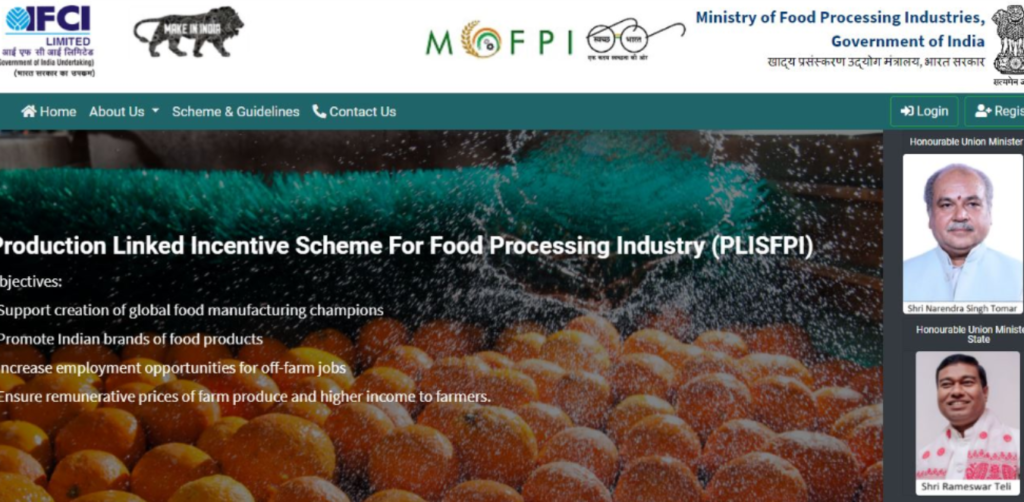
Sign in on the Government Portal:
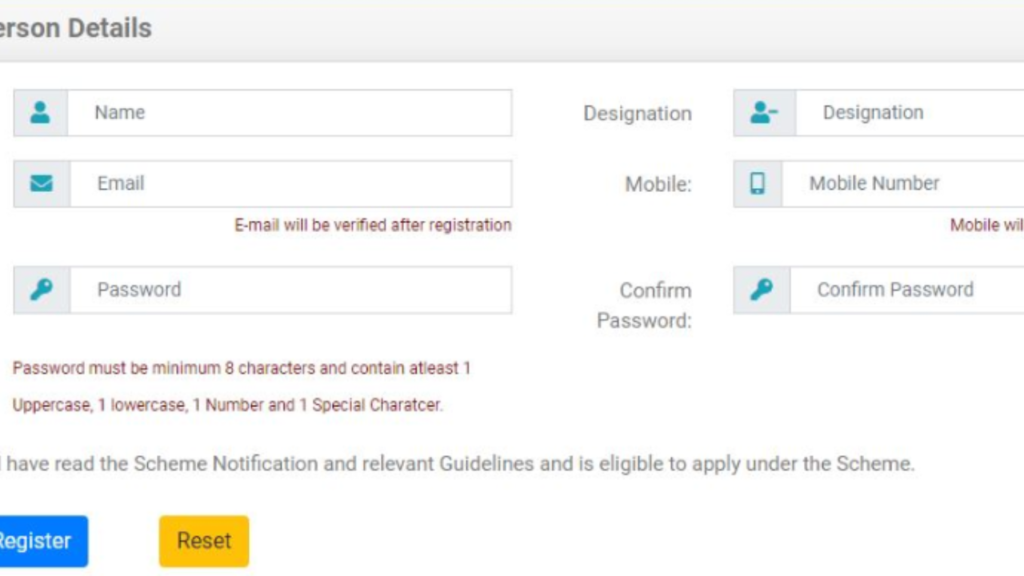
Register yourself on the official PLI portal of your sector. These login credentials will be used for all submissions and annual claims.
Prepare Required Documents:
- Certificate of Incorporation
- In-Depth 5–6 Year Business Plan (production, sales, investment, and employment projections)
- Audited Financial Statements (previous 3 years)
- Proof of Registration, PAN Card & GST Registration Certificate
- Memorandum of Association (MoA)
- Board Resolution authorising the application
- Investment Plan & Proof of Funds (bank statements, loan sanction letters)
Fill & Submit the Application
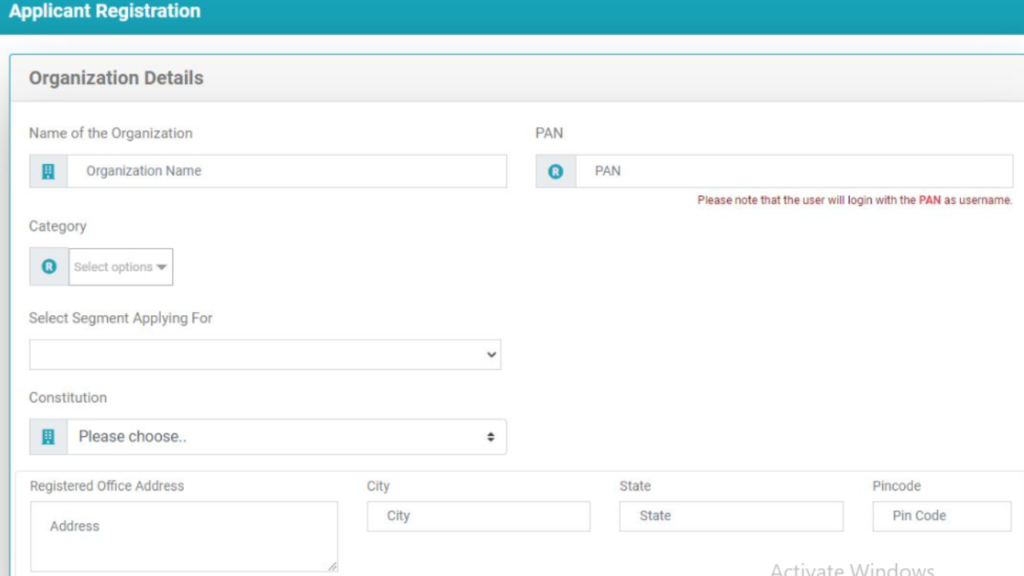
Prepare financial projections and supporting documentation that are consistent.
Application Evaluation
The relevant ministry will evaluate your application in terms of investment credibility, technology readiness, and scheme alignment. This can take a few months.
Receive Approval Letter
Shortlisted companies are provided a formal approval letter detailing incentive rates, performance commitments, and timelines for compliance.
Yearly Claims
By the close of each financial year, upload certified sales data, investment evidence, and compliance declarations via the portal.
Verification & Disbursement
Upon verification from the government (which could involve inspections/audits), the incentive amount is credited directly to your company bank account.
Conclusion
PLI Scheme India is a challenge to a more risk-based experimental industrial policy. By ensuring linkages between production performance and government financial support, it attracted global manufacturers, generated lakhs of jobs, and put India on track to emerge as a world manufacturing power.
Whether you are a business wanting to know what incentives are available for your industry, a student interested in preparing for the PLI Scheme UPSC exams, or an inquisitive citizen monitoring developments shaping the economy of India, knowledge of this scheme is critical. If you are a government employee searching for life insurance, the Post Office PLI Scheme (Postal Life Insurance) managed by India Post is still one of the most reliable and cost-effective options in the market.

Leave a Comment